
How Executives Build High-Performing Smart Industry Teams
A few years ago, I stood in the heart of a manufacturing plant owned by a multinational client. The air smelled faintly of machine oil and anticipation. Initially, we were called in for what seemed like a simple ask: reduce product waste. However, what we discovered was far more complex and revealing about the state of modern leadership in Smart Industry.
Shockingly, the factory was wasting 20 tons of product every week. Consequently, millions slipped away, and their people were burning out.
As it turned out, the root cause was viscosity errors in a legacy batch-production process. The tracking system relied on Excel, with each batch taking a minute to update. When you multiply that across hundreds of machines and days, you end up with an ecosystem built on delay rather than speed. Not surprisingly, this wasn’t just a process issue; it reflected deeper leadership gaps.
Moreover, research from McKinsey shows that disconnected teams using outdated systems experience double the burnout rates and productivity losses. Therefore, digital transformation alone isn’t enough. Instead, high-performing teams need leaders who align technology, systems, and people through strong vision and psychological safety.
Ultimately, that plant crystallized a deeper truth I’d been observing in multinationals: You can’t innovate your way out of a leadership problem without integrated leadership and an unwavering commitment to cultivating high-performing teams.
Smart Industry Isn’t Just About Tech. It’s About Teams.
As a leader, whether you’re in the C-suite or steering regional operations, you already understand that your organization’s future depends on advanced technologies like AI, IoT, and automation. However, technology alone is not the unlock. The real differentiator lies in your team’s ability to execute. In practice, even the most sophisticated tools fail to deliver unless they are wielded by high-performing teams aligned in purpose and process.
In today’s high-stakes environment, multinational organizations must do far more than just adopt new tools. They’re expected to integrate Operational Technology (OT) with Information Technology (IT), reconfigure supply chains almost overnight, and deploy digital twins across multiple regions. All of this must happen while staying aligned with regulatory standards, managing costs, and meeting ESG commitments.
Notably, McKinsey research emphasizes that successful IT/OT convergence is critical for digital-scale outcomes, and it depends on teams that can collaborate across functions and regions.
🔗 https://www.mckinsey.com/business-functions/operations/our-insights/how-to-drive-it-ot-convergence
Furthermore, Harvard Business Review confirms that cross-functional “fusion teams” consistently outperform traditional silos, whether working with IT, operations, or domain experts.
🔗 https://hbr.org/2021/09/build-fusion-teams-to-break-organizational-silos
Therefore, without fast, focused, and cross-functional teams, even the most ambitious transformation efforts are destined to stall. Ultimately, strategic technology investments reach their full potential only when backed by a workforce that is empowered, aligned, and ready to move. That starts with developing high-performing teams capable of turning tools into outcomes.
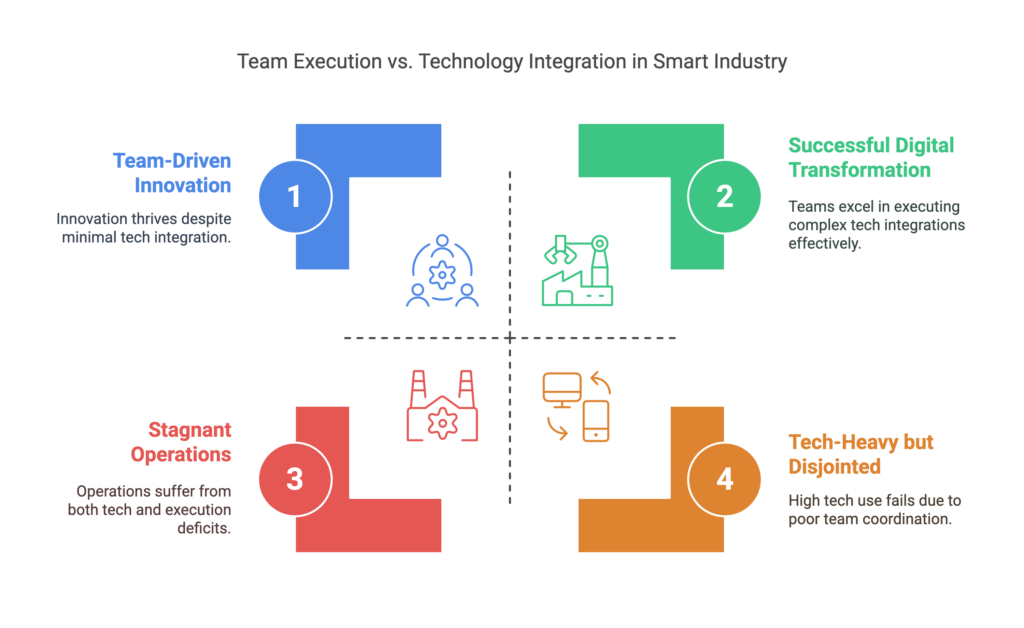
From Fractured Teams to Frictionless Performance: The Case for Strategic Team Building
Back at that factory, we didn’t begin with machine learning models or SQL queries. Instead, we started with people, bringing together a cross-disciplinary team of data scientists, engineers, developers, and process managers. Although most had never worked together and spoke different professional languages, from day one, our focus was on structured collaboration.
In the first week, we didn’t touch laptops. Rather, we filled whiteboards, aligned with stakeholders, and created shared understanding. Because access rights, datasets, cloud environments, and documentation were pre-secured, the team was able to move fast. Within days, we had a clear roadmap. Within weeks, a working prototype. And in just three months, we cut waste by 1,040 tons annually and scaled the model across 24 factories worldwide.
What enabled this rapid transformation was not technology alone but the team culture behind it. It was a culture rooted in trust, collaboration, and clarity, all of which are hallmarks of high-performing teams. Supporting this, McKinsey’s research shows that digital transformation succeeds when teams are structured intentionally and backed by trust and coordinated leadership:
Ultimately, the key insight is clear: tech may spark innovation, but without high-performing teams that foster trust, clarity, and psychological safety, transformation efforts are unlikely to thrive.
Why Most High-Tech Teams Fail and How Yours Can Succeed
Across multinational organizations, a recurring set of challenges tends to undermine performance and innovation. First, siloed expertise continues to block the flow of ideas and collaboration, ultimately killing cross-functional innovation. Second, teams frequently experience delays in decision-making due to a lack of clarity around priorities.
Additionally, leaders often over-promise without adequately resourcing their teams, leading to preventable burnout. In many cases, leadership styles remain rigid, even in environments that clearly demand adaptability and rapid response. Finally, many organizations fail to keep up with the accelerating pace of change, leaving teams operating with outdated skills and frameworks that no longer serve them.
These issues may appear independently, but more often, they reinforce each other and compound inefficiency, frustration, and strategic misalignment at scale.
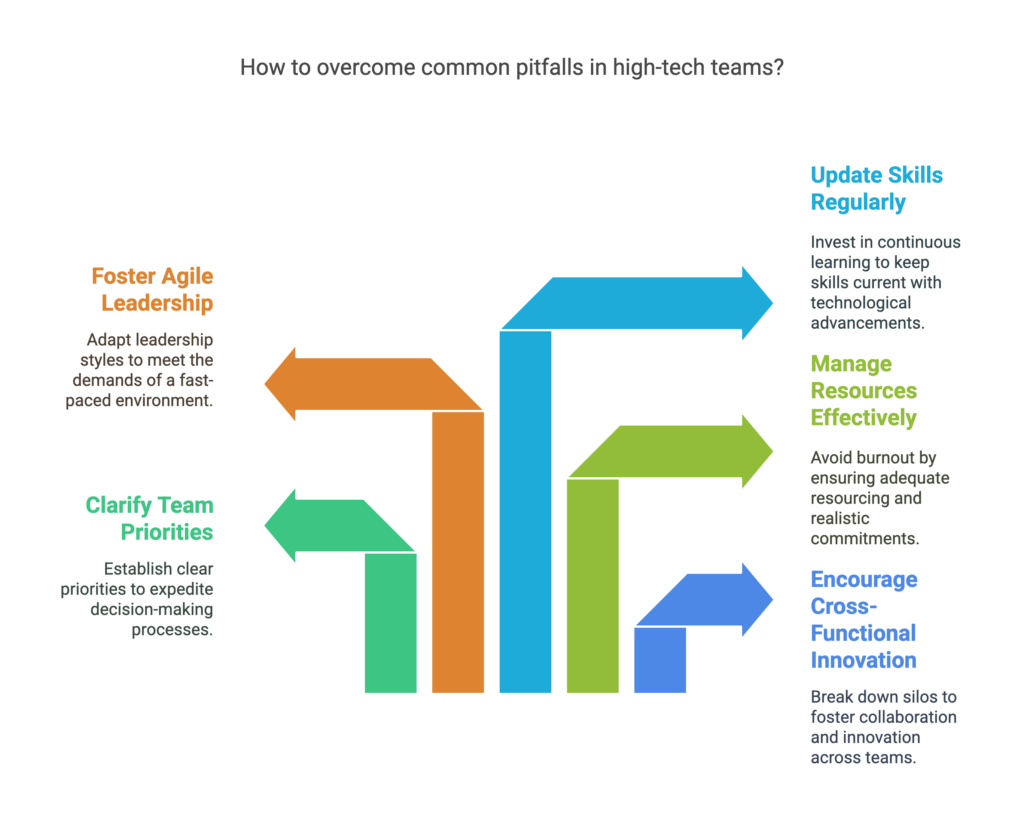
If these feel familiar, they should. Smart Industry doesn’t forgive leadership gaps. It magnifies them.
The antidote? A strategic team development framework. Here’s what I’ve seen work repeatedly across Fortune 500 and industrial leaders:
1. Build Cross-Functional Teams Intentionally
Effective team composition doesn’t happen by accident. Pair Operational Technology (OT) experts with data scientists and give them shared objectives from the outset. To bridge communication gaps, introduce product managers as translation layers between technical execution and business needs. This builds clarity, cohesion, and momentum.
2. Train for Adaptability, Not Just Expertise
In fast-evolving industries, static knowledge quickly becomes obsolete. Instead of focusing only on current technical skills, invest in ongoing learning, especially in areas like IoT, AI, and cybersecurity. Recognize and reward curiosity, learning agility, and the willingness to adapt. These are the real future-proof traits.
3. Operationalize Psychological Safety
Innovation cannot thrive in fear-based environments. Normalize failure as part of experimentation, and lead by example when it comes to transparency. When leaders model vulnerability and openness, teams are more likely to take creative risks and recover from setbacks faster.
4. Engineer the First Week
Team performance starts with onboarding. Eliminate delays by ensuring data access, system permissions, and documentation are all in place before work begins. Clarify business impact early so that every team member understands what success looks like and how their contributions fit into the broader strategy.
5. Keep the Feedback Loop Open
Don’t wait until the post-mortem to gather insights. Instead, bake continuous feedback into the process with daily check-ins, stakeholder pulses, and regular retrospectives. By making iteration a cultural norm, you ensure your teams stay agile, responsive, and consistently aligned with business goals.
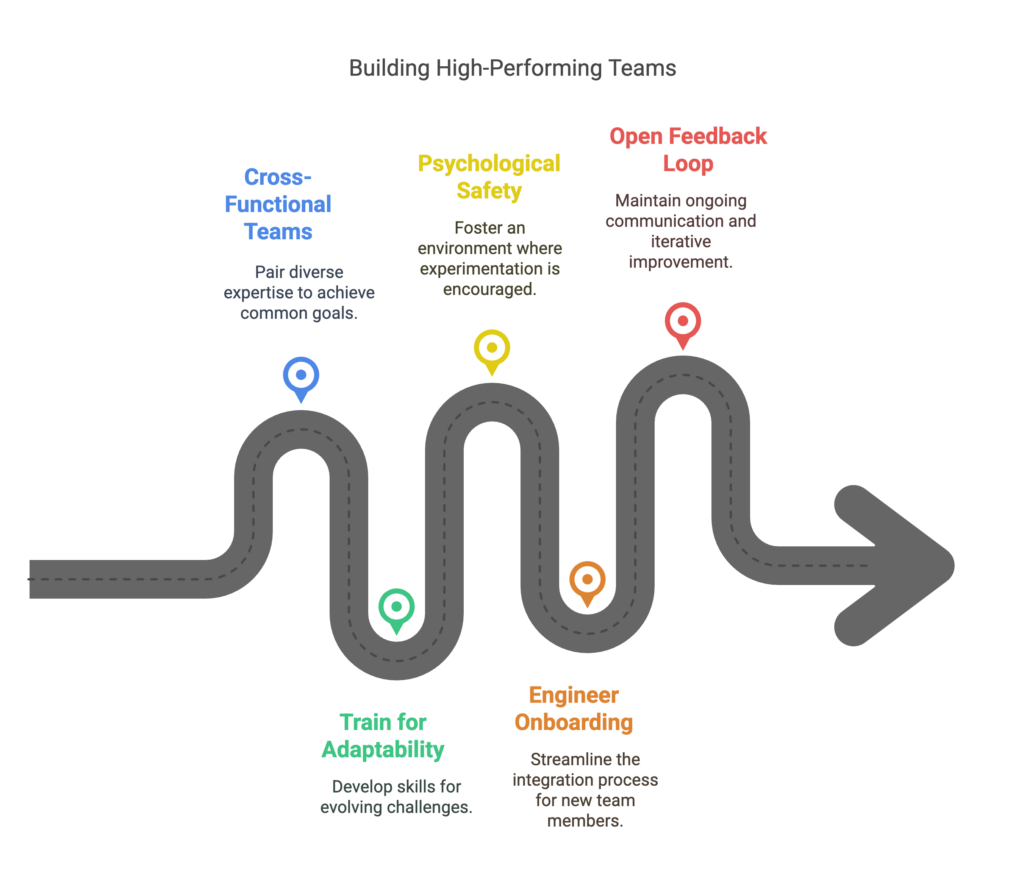
The Executive Mandate: Scale Culture as You Scale Tech
When teams are built with intention, they become engines of innovation. Rather than simply keeping pace, they accelerate ahead of competitors. They foresee problems before they escalate, adapt with precision, and proactively shape what’s next.
Moreover, the real impact extends well beyond performance metrics. In today’s high-pressure, globally scaled environments, resilience is the true differentiator. Teams that are supported and aligned don’t burn out; they flourish. This is where executive burnout and fulfillment intersect. Sustainable transformation doesn’t begin with the latest tools. It starts with people who are equipped mentally, emotionally, and culturally to lead and thrive.
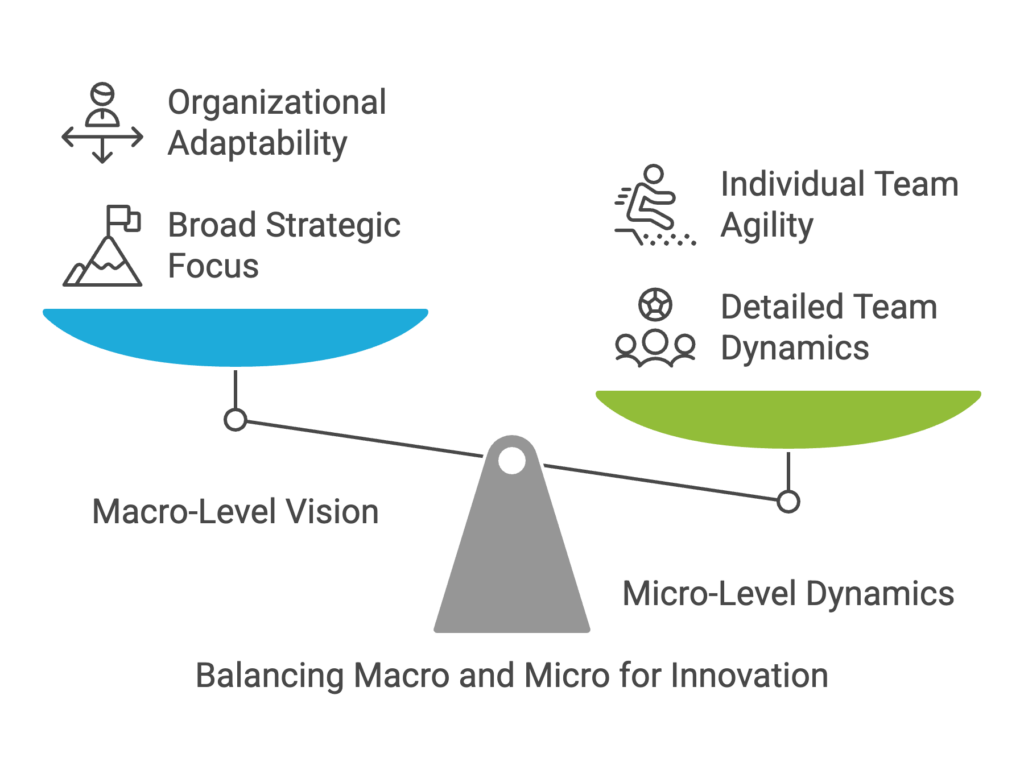
Leadership is the Ultimate Integration Layer
In the Smart Industry, technology does not lead; people do. While AI, IoT, and industrial automation shape the infrastructure, it is your teams that determine how far, how fast, and how sustainably your business can grow.
You can invest in cutting-edge platforms and scale infrastructure across continents. But no matter how advanced the tools, you cannot outsource what truly drives transformation: team alignment, leadership culture, and cross-functional trust. These are not plug-and-play assets. They are forged through intention and must be modeled at the top.
So the real question is not whether your organization is adopting digital transformation.
It is whether your teams are built to convert that investment into sustained, measurable outcomes across time zones, silos and cycles of change.
If your answer is not a confident “yes,” then this is your inflection point.
Because in today’s era of reinvention, only two kinds of companies will emerge: those that build high-performing, resilient teams and those that lose ground to them.
Here is the deeper truth: without attention to executive burnout and fulfillment, even the best technology falls flat. Leaders who neglect these human dimensions risk driving results at the cost of retention, creativity, and long-term momentum.
You have already invested in the tools. Now it is time to invest in the people who will unlock their full potential.
Are you ready to build the team that delivers innovation, growth, and lasting impact?
Let’s get to work.