
In today’s boardrooms, executive leadership trauma often goes overlooked, yet it remains one of the most influential forces shaping decision-making, communication, and organizational culture. Below the polished exterior of confident, high-performing leaders often lies a history of unresolved personal experiences. Moreover, these hidden traumas don’t just impact personal well-being; they also affect how leaders manage risk, build culture, and relate to their teams.
First, research shows that trauma-informed leadership, which is marked by emotional safety and transparency, can enhance retention and engagement among teams. In fact, studies from SHRM and Relias highlight how leaders who acknowledge their own trauma and practice vulnerability foster psychological safety and post-traumatic growth among employees.
Consequently, executive trauma subtly influences core leadership behaviors:
- Decision-making may become overly cautious or impulsive depending on past experiences.
- Communication may contain unspoken defenses or emotional reactivity.
- Risk tolerance and cultural tone, especially the “tone from the top,” can unconsciously mirror a leader’s unresolved issues.
Therefore, addressing executive leadership trauma is critical for high-performing leaders aiming to foster healthy, high-trust cultures. By integrating trauma-informed practices, they can rewrite internal narratives and model emotional resilience for both themselves and their organizations.
Ultimately, when high-performing leaders acknowledge and heal their own histories, they pave the way for deeper connection, authentic leadership, and sustainable organizational performance.
Recognizing Executive Leadership Trauma in Behavior and Decision-Making
Executives often appear confident and decisive. However, beneath that polished surface, unprocessed trauma may quietly shape professional behavior and interpersonal dynamics. Whether stemming from adverse childhood experiences or major professional failures, trauma that goes unaddressed can manifest in subtle yet damaging ways. For high-performing leaders, this impact often goes unnoticed until it begins to erode performance and relationships.
Common Trauma Responses Among Executives
- Micromanagement and Control Issues A deep fear of vulnerability can drive an excessive need for control. As a result, many leaders micromanage, resist delegation, and struggle to empower others. Harvard Business Review notes this behavior often stems from unresolved emotional patterns.
- Workaholism as Emotional Avoidance Leaders may immerse themselves in relentless productivity to avoid discomfort or self-reflection. According to Deloitte, compulsive overworking is a common trauma-based coping mechanism.
- Impaired Decision-Making Trauma disrupts the brain’s stress regulation systems. Consequently, executives may default to reactive, impulsive, or frozen decision-making under pressure. McKinsey highlights this in crisis-response leadership patterns.
- Perfectionism and Fear of Failure Early criticism can lead to overachievement rooted in fear. As a result, many high-performing leaders pursue unrealistic standards and fear appearing weak or imperfect.
- Emotional Detachment To maintain control, some executives emotionally withdraw. Unfortunately, this blocks authentic connection with teams, peers, and even family. Forbes explores how emotional isolation undermines executive presence and culture.
Ultimately, recognizing these patterns is the first step for high-performing leaders seeking to heal, lead authentically, and build emotionally resilient teams.
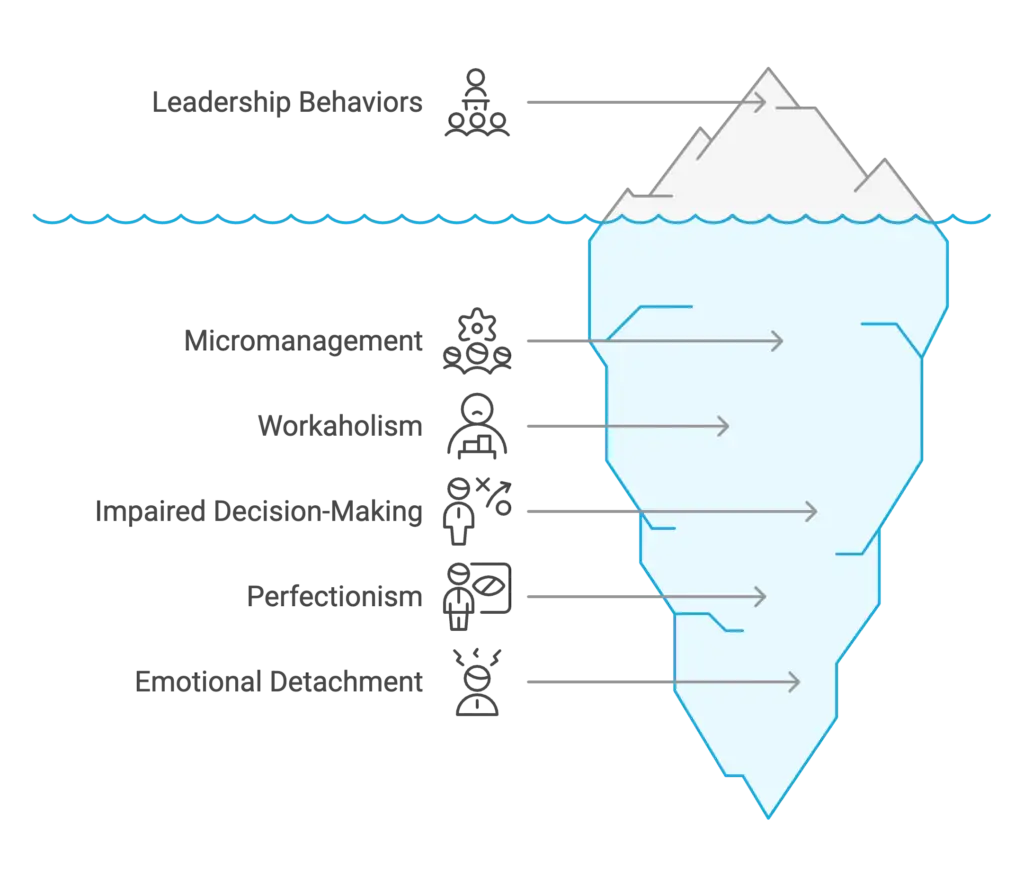
Recognizing these patterns is the first step toward mitigating their impact on leadership effectiveness.
The Organizational Impact of Trauma-Informed Leadership
Unresolved trauma at the top can subtly but significantly shape a company’s culture, decision-making, and long-term adaptability. For high-performing leaders, these emotional patterns often spread beyond the individual, weaving into the organization’s fabric in hidden ways.
Erosion of Trust and Innovation
When leaders carry unresolved trust issues, they tend to establish overly bureaucratic systems. As a result, employee empowerment suffers, and creativity diminishes. According to LinkedIn experts, “hidden trauma… seeps into the very fabric of an organization” and kills engagement.
High Employee Turnover
Emotional disconnection at the top often leads to disengaged teams. Consequently, high turnover becomes the norm, disrupting continuity and hampering morale. Studies show that toxic leadership linked to unresolved trauma dramatically increases turnover intentions for employees.
A Culture of Risk Aversion
A leader’s fear of failure doesn’t stay in the boardroom; it permeates the organization. As a result, teams become hesitant to take calculated risks, and innovation stalls. Research by Woebot Health shows that traumatized organizations see measurable increases in conflict and turnover.
In sum, executive trauma is not merely a private struggle; it actively degrades organizational health. For high-performing leaders, confronting and resolving their own wounds is not optional. It is essential to rebuild trust, reignite innovation, and stabilize performance.

Addressing these issues is crucial for cultivating a resilient and adaptive organizational culture.
Digitalization as a Solution for Reducing Trauma-Driven Decision Fatigue
Implementing digital solutions can significantly reduce the cognitive load on executives, allowing for more strategic focus:
- AI-Powered Decision Support: Artificial intelligence can process complex data sets, providing executives with actionable insights and reducing the burden of data analysis.
- Automated Workflows: Streamlining routine processes through automation minimizes the need for constant oversight, freeing leaders to concentrate on high-level strategic decisions.
- Centralized Data Dashboards: Consolidating key performance indicators into a single interface enhances situational awareness and facilitates informed decision-making.

By embracing these technologies, executives can mitigate decision fatigue and enhance organizational efficiency.
Healing Executive Leadership Trauma: Steps Toward Self-Awareness and Impact
To transform personal challenges into leadership strengths, executives can adopt the following strategies:
- Cultivate Self-Awareness: Engage in reflective practices to identify how past experiences influence current behaviors and decision-making patterns.
- Seek Professional Support: Collaborate with therapists or executive coaches specializing in trauma to develop coping mechanisms and resilience strategies.
- Foster a Supportive Culture: Implement trauma-informed management practices that prioritize psychological safety and open communication within the organization.
- Embrace Work-Life Balance: Prioritize personal well-being to prevent burnout and maintain peak performance levels.

Conclusion: Embracing Wholeness in Leadership
In today’s evolving business landscape, executive leadership trauma can no longer remain unspoken or unexamined. For high-performing leaders, success demands more than operational skill or strategic foresight. It requires inner clarity and emotional resilience. By confronting unresolved trauma, executives unlock a deeper level of self-awareness that transcends personal well-being and transforms their leadership style.
Research confirms that self-aware, emotionally intelligent leaders foster psychological safety, which is a shared belief that it’s safe to take risks and speak up. This kind of environment boosts innovation and trust. As a result, emotionally whole leaders implement cultures grounded in trust, creativity, and long-term adaptability.
Emotionally integrated leaders are also better equipped to make thoughtful decisions and inspire loyalty. Instead of reacting from fear or scarcity, they lead from purpose and clarity. These are qualities linked to stronger team performance and resilience.
This is the next evolution of leadership. It is not harder or more aggressive, but more integrated. High-performing leaders who align their inner world with their external responsibilities set a new standard. It is a standard where business excellence and human fulfillment coexist.
If the future of leadership is emotionally intelligent, then the present demands a courageous first step. That step is facing what’s unresolved, healing what’s hidden, and building from strength rather than survival. After all, when you lead from wholeness, your impact outlasts performance metrics. It becomes something deeply human.